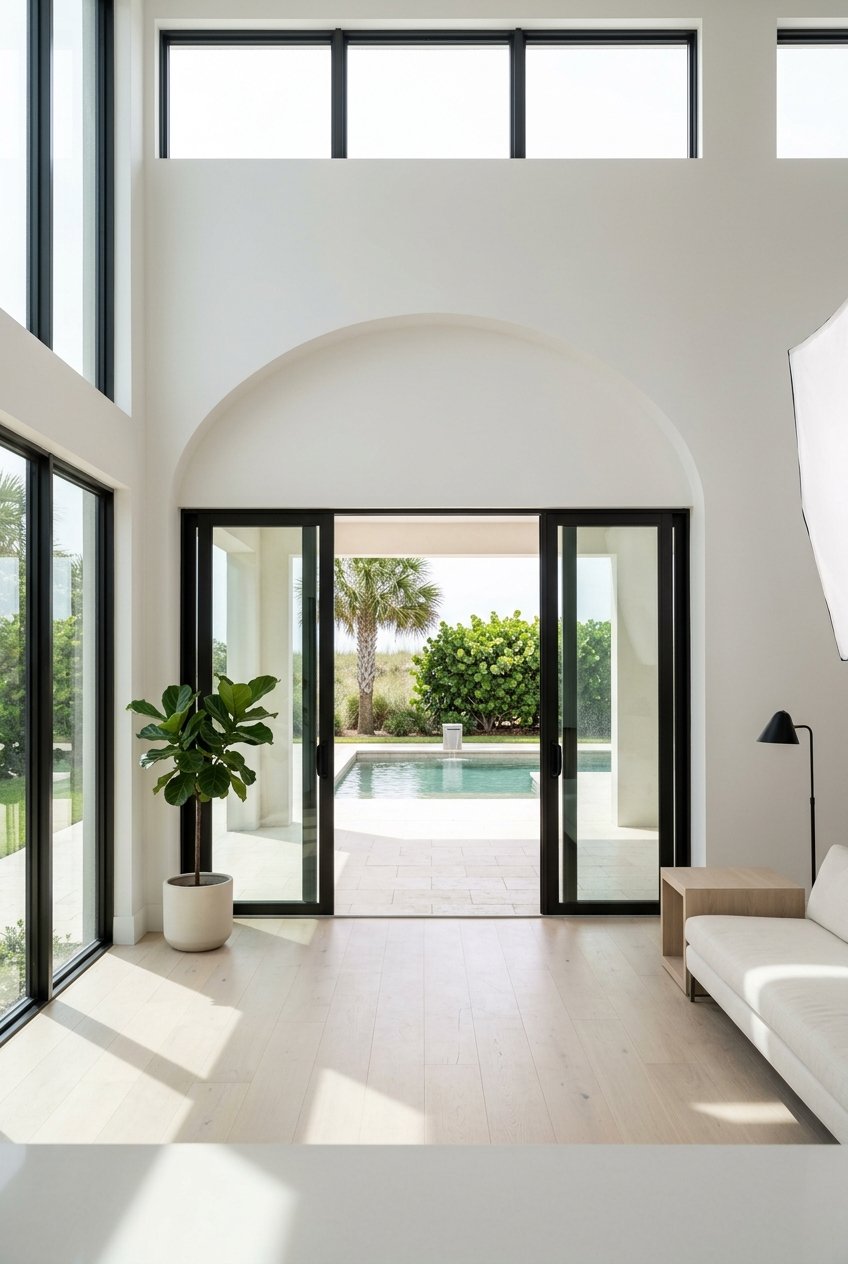
If your Golden Triangle home is truly rare, it should not be marketed like ordinary coastal inventory. In Melbourne Beach, scarcity is real, buyer expectations are high, and first impressions happen online before a showing is ever scheduled. If you want to attract today’s luxury buyer and protect your value in a more buyer-aware market, your strategy needs to be precise from day one. Let’s dive in.
Why Golden Triangle Positioning Matters
The Golden Triangle sits within one of the Space Coast’s most supply-constrained coastal settings. Melbourne Beach is about 99% built out and remains predominantly residential, which means well-located homes are difficult to replace. That kind of scarcity can support premium pricing, but only when a home is presented and priced in a way that matches buyer expectations.
That point matters even more in today’s market. Broader Melbourne Beach data from early 2026 showed a softer environment, with signs of a buyer-leaning market, more homes for sale, and longer marketing times than many sellers expect. In a market like this, luxury buyers are still active, but they are more selective and less willing to overlook weak presentation or inflated pricing.
Treat the Home as a Luxury Asset
A Golden Triangle property should be positioned as part of Brevard County’s luxury segment, not as generic beachside housing. In January 2026, Brevard County’s luxury benchmark for single-family homes was $610,000, with a median luxury sales price of $817,606. That provides useful context for sellers who need to think beyond standard neighborhood comps and focus on asset-level positioning.
There is also proof that this corridor can command major numbers when the product and presentation align. Public sales records on Atlantic Street include reported closings of $4.61 million and $3.8 million. Those outcomes support a simple truth: premium results are possible here, but they are earned through strategy, not assumed through location alone.
Luxury Buyers Compare Differently
Today’s luxury buyer is not just comparing bedroom counts or square footage. You are often competing on setting, condition, ease of ownership, design quality, privacy, outdoor living, and how confidently the home answers questions about coastal risk.
That means your listing should tell a complete story. The home needs to feel aspirational, but it also needs to feel credible, functional, and ready for real life on the barrier island.
Win the First Click
Luxury marketing now starts on a screen. According to the National Association of Realtors, 81% of buyers rated listing photos as the most useful feature in their online search, and 52% found the home they purchased online. If your property does not stand out visually right away, you may lose interest before a buyer ever reads the description.
That is why professional photography is not optional in this segment. Bright natural light, clean framing, strong lead images, and photos that show both architecture and setting are all part of the value story. In a place like the Golden Triangle, the surrounding environment is part of what buyers are purchasing.
Show the Setting, Not Just the Rooms
For a coastal luxury home, interiors alone are not enough. Buyers want to understand the full lifestyle of the property, including outdoor spaces, approach, privacy, and the relationship to the beachside setting.
Aerial imagery can be especially effective here because it helps buyers see context quickly. For waterfront and coastal listings, that broader perspective can help communicate lot placement, proximity, surrounding streetscape, and the overall feel of the property in ways standard interior images cannot.
Staging Should Clarify, Not Decorate
Staging works best when it helps buyers picture themselves in the home without distraction. NAR’s 2025 staging survey found that 83% of buyers’ agents said staging made it easier for buyers to visualize a property as a future home. That is especially important in luxury homes, where scale, layout, and flow need to feel intentional.
In the Golden Triangle, staging should support a refined coastal presentation. Think open sightlines, edited furnishings, soft textures, and spaces that feel calm and usable. The goal is not to fill rooms. The goal is to make each space make sense.
Focus on Lifestyle Rooms
Today’s buyers respond to rooms that match how they actually live. Flexible spaces for guests, work, or hobbies can carry real weight, especially when they are presented with a clear purpose.
Outdoor living also deserves careful attention. If your home has a pool terrace, covered lanai, courtyard, balcony, or other usable exterior area, it should be styled and photographed as part of daily living rather than treated as an afterthought.
Smart Features Should Feel Seamless
Luxury buyers increasingly expect modern convenience, but they do not want technology to overpower the design. Current guidance for the luxury market points to strong buyer interest in professionally installed smart-home systems, especially when the components are discreet and the setup feels integrated rather than patched together.
If your home includes smart lighting, climate control, security, shades, audio, or other systems, presentation matters. Clean installation, simple controls, and a clutter-free look can make these features feel like a benefit rather than a burden.
Future-Ready Details Add Confidence
In larger or higher-end homes, hidden wiring and thoughtful system design can support perceived value. Buyers at this level often want comfort, ease, and peace of mind. If your home offers those benefits, the marketing should explain them in a way that feels polished and easy to understand.
Price for the Market You Have
In a softer market, overpricing is one of the fastest ways to lose momentum. Melbourne Beach market data from early 2026 pointed toward a buyer-favored or balanced environment, with signs that homes were negotiating below ask and taking longer to sell than in earlier market cycles.
That does not mean you price low. It means you price exactly. For a Golden Triangle home, that requires more than broad town-level averages. Pricing should reflect your micro-location, condition, updates, lot quality, views, and the strength of your overall presentation.
Aspirational Pricing Can Backfire
Luxury buyers are informed. If your home launches above what the market will support, the listing can sit, accumulate days on market, and create the impression that something is off. That drag can be difficult to reverse, even with later adjustments.
The strongest strategy is to align pricing with the evidence and support it with a polished launch. When pricing and presentation work together, you create urgency instead of resistance.
Coastal Diligence Is Part of the Sale
In this part of Florida, buyers do not just buy the home. They buy the risk profile, the preparedness, and the confidence that comes from good documentation. Brevard County identifies flooding as its most frequent hazard and notes that standard homeowners insurance does not cover flood damage.
That means flood-zone status, mitigation measures, and available documentation can directly affect buyer comfort. Buyers may also pay close attention to whether a flood policy is in place and how timing could affect coverage, since county guidance says flood policies often take 30 days to become effective.
Documentation Helps Preserve Value
If available, clear records can strengthen your position. Elevation certificates, floodplain-related information, and other preparedness details can help answer questions before they become objections.
This is also a barrier-island market, and local planning materials note that flood-prone areas are an important consideration in development and redevelopment. In practical terms, buyers may be thinking about resilience, not just aesthetics.
Shoreline Conditions Matter Too
Because Melbourne Beach is on the barrier island, shoreline condition and storm awareness are part of how buyers judge long-term value. Local conditions can influence how a home feels from both a lifestyle and ownership standpoint.
It is also helpful that beach management is active. In March 2026, the Town of Melbourne Beach reported that South Reach beach renourishment had commenced. For sellers, that supports the broader message that shoreline maintenance is not theoretical. It is an active part of the local coastal environment.
Launch With Coordination, Not Guesswork
A luxury listing performs best when the launch is coordinated across pricing, prep, visuals, and exposure. NAR’s 2024 seller report found that most sellers used an agent and that listings most often entered the MLS first. Sellers also said they most wanted help with marketing, pricing competitively, and selling within a specific timeframe.
That lines up with what works in the Golden Triangle. Homes in this segment benefit from a structured plan that includes staging support, photography, digital presentation, timing, and outreach that starts strong.
The First 72 Hours Count
Early listing activity matters. Recent guidance shows that views, saves, and shares can help a listing gain traction, and that image order and lead photos can influence performance if attention slows.
That means your launch should not feel pieced together. Your home should enter the market with its strongest visuals, clear messaging, and a pricing strategy that invites serious interest right away.
Exposure Should Be Multi-Channel
Luxury buyers do not all come from one source. Seller marketing data shows that homes are promoted through the MLS, websites, third-party portals, yard signs, open houses, and other channels.
For a Golden Triangle listing, broad and synchronized exposure matters. The goal is to create repetition and consistency so qualified buyers see the home presented at a high standard wherever they encounter it.
What Moves the Needle Most
If you are preparing to sell in the Golden Triangle, the biggest opportunity is not simply listing the home. It is positioning the home so buyers immediately understand both its rarity and its readiness.
That usually comes down to five things:
- Precise pricing based on micro-market evidence
- Professional photography and strong digital presentation
- Clean staging that clarifies space and lifestyle
- Clear communication around flood, insurance, and coastal conditions
- A coordinated launch that creates early momentum
In a neighborhood where supply is limited and buyer expectations are high, those details shape the result. The homes that stand out are the ones that combine emotional appeal with hard proof.
If you want expert guidance on how to price, prepare, and present your Golden Triangle home for today’s luxury buyer, connect with Dewayne Carpenter and the Carpenter | Kessel team.
FAQs
How should you price a Golden Triangle home in today’s market?
- You should base pricing on recent micro-market evidence, property condition, lot and view quality, and current buyer behavior rather than on broad coastal optimism or outdated peak-market expectations.
Why does presentation matter so much for a Melbourne Beach luxury listing?
- Most buyers begin online, and listing photos are one of the most important parts of their search, so strong visuals, staging, and a polished first impression can directly affect interest and showing activity.
What features do today’s luxury buyers want in a Golden Triangle home?
- Many luxury buyers respond to usable outdoor living, flexible interior spaces, energy-conscious upgrades, and discreet smart-home features that add comfort without creating visual clutter.
What flood information should sellers gather for a Melbourne Beach home?
- Sellers should be prepared for buyer questions about flood-zone status, mitigation, insurance timing, and any available records such as elevation-related documentation that can help support confidence.
Why is a coordinated launch important for a Golden Triangle listing?
- A coordinated launch helps your home make the strongest impact in the first few days on market, when early views, saves, and shares can influence traction and buyer attention.