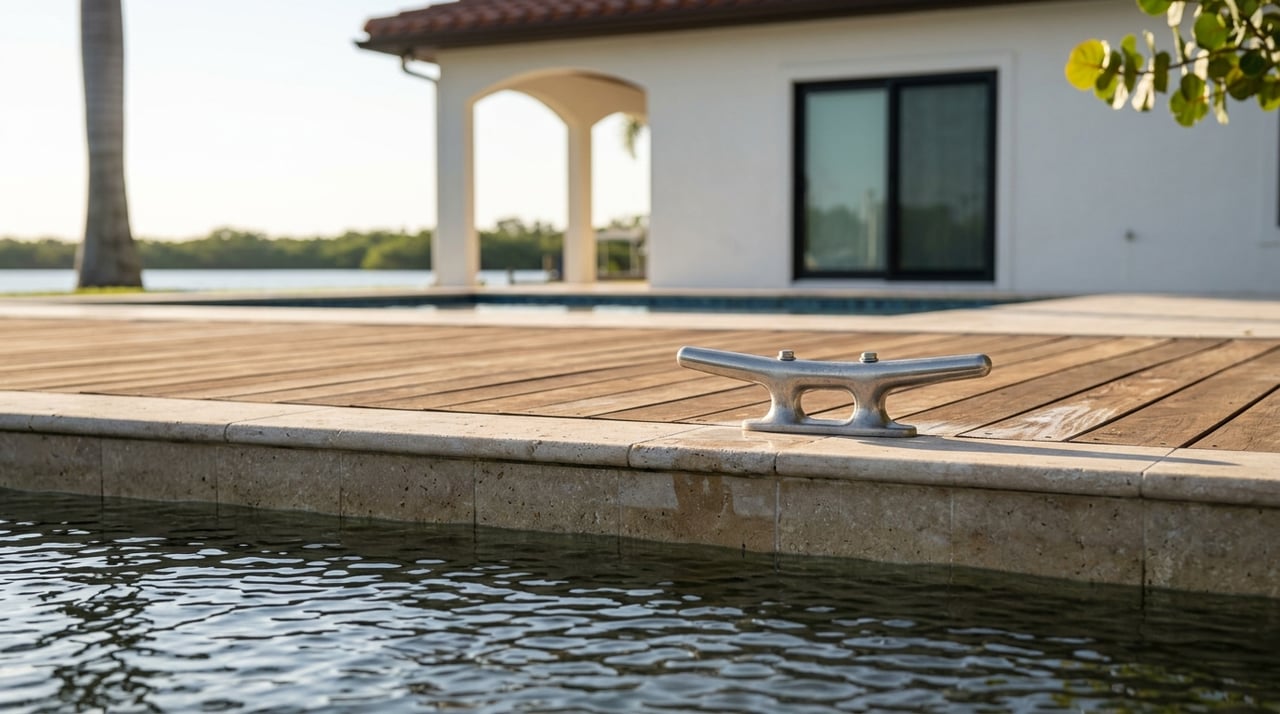
Wondering what “river-to-river” really means on Merritt Island, and why it can shape both lifestyle and value in a major way? If you are buying or selling a waterfront estate here, that phrase is more than marketing language. It points to a very specific type of property setting, and understanding it can help you make better pricing, due diligence, and positioning decisions. Let’s dive in.
What River-to-River Means
On Merritt Island, “river-to-river” is not just a casual description. Brevard County recognizes it as a distinct local site category in its land valuation practice, including a site code for river-to-river property.
That matters because it shows these homesites are treated differently from other types of waterfront parcels. In North Merritt Island, the geography is especially literal, with land lying between the Banana River Channel and the Indian River Channel, north of the Barge Canal.
For you as a buyer or seller, the takeaway is simple. A true river-to-river estate is typically part of a rare land pattern where the property’s setting between two waterways becomes central to how people understand its utility, privacy, and market appeal.
Why These Estates Stand Out
Not all waterfront property functions the same way, even when listings use similar language. Brevard County’s appraisal system separates river-to-river, river-front, river-access, canal-front, Banana River-front, and dock-site parcels into different categories.
That local distinction tells you a lot about how the market views these homes. On Merritt Island, lot configuration is not a small detail. It is one of the main drivers of how a property is evaluated.
For river-to-river estates, buyers tend to look closely at more than square footage or interior finishes. They also care about frontage, depth, buildable area, orientation, privacy, dock placement, and how usable the water access actually feels day to day.
Waterfront Utility Matters
A waterfront lot may look impressive on paper but perform very differently in real life. That is why local valuation methods can consider front foot, effective front foot, or per-lot analysis depending on the shape and utility of the site.
If a parcel has unusual dimensions, limited dock options, or less practical shoreline access, those factors can influence how the market responds. On the other hand, a well-oriented homesite with usable frontage and strong privacy can carry a premium because it solves real lifestyle needs.
Merritt Island’s Setting Supports Demand
Part of the appeal of Merritt Island’s river-to-river estate market is the surrounding natural setting. The area sits alongside major estuarine waters and protected lands, including the Banana River and the Merritt Island National Wildlife Refuge overlay on Kennedy Space Center lands.
That broader landscape helps preserve open space, habitat, and the low-density waterfront character that often draws luxury buyers to this part of Brevard County. For many buyers, the appeal is not just the home itself. It is also the sense of space, water, and long-term environmental context around it.
This does not guarantee value growth or override property-specific issues. But it does help explain why river-to-river estates can feel fundamentally different from a standard waterfront lot in a denser setting.
Boating Access Shapes Lifestyle
For many buyers, boating is a core part of the Merritt Island waterfront lifestyle. The Barge Canal is one of the area’s most important water links, connecting the Banana River Lagoon and the Indian River Lagoon and offering access to Sykes Creek and nearby waterways.
That connectivity can make a big difference in how a property lives. A home with a dock is one thing. A home with a dock and a practical route to the waters you actually want to use is something else.
Public access points also reinforce the area’s boating culture. Kiwanis Island Park offers a motorized boat ramp and natural launch area into Sykes Creek, while Intracoastal Waterway Park provides Indian River access and riverfront amenities.
Navigability Is Not Just About Location
Good boating access still needs a closer look. Local water routes may include slow-speed zones, bridge openings, depth considerations, or other restrictions that affect how quickly and easily you can get from your dock to open water.
Brevard County identifies the Barge Canal and Sykes Creek as all-year slow-speed zones for manatee protection. Parts of the Banana River basin are also heavily used for watersports, which can shape how buyers think about convenience, activity, and boating patterns.
If you are buying, ask about the real-world route from the dock, not just the map view. If you are selling, clear answers about water access and navigation can make your listing more credible and easier for buyers to evaluate.
Riparian Rights and Waterfront Use
Florida law recognizes riparian rights for land bordering navigable waters when title extends to the ordinary high-water mark. These rights can include ingress, egress, boating, bathing, and fishing.
For buyers, this is an important part of understanding what comes with a waterfront parcel. For sellers, it is a reminder that documented lot lines, shoreline conditions, and marine improvements should be presented clearly during the sale process.
Riparian rights are meaningful, but they do not replace due diligence. A property can have waterfront rights and still be affected by permitting rules, speed zones, or physical limitations related to dock design and water depth.
What Buyers Should Verify
When you are evaluating a Merritt Island river-to-river estate, details matter. These properties often require more careful review than a typical inland home because value depends on both the house and the site.
Here are some of the most important items to confirm:
- Whether the parcel is truly classified and marketed as river-to-river rather than river-front, access-only, or canal-front
- Flood zone information and any available elevation certificate
- Flood insurance availability and likely cost, since standard homeowners policies usually do not cover flood losses
- Whether docks, seawalls, lifts, piers, piles, or other marine improvements were properly permitted
- How boat route conditions, including slow-speed zones or canal access, affect daily use
- Whether nearby protected shoreline or habitat could affect future exterior or marine improvements
A careful review up front can save you time, money, and surprises later. On a complex waterfront property, small oversights can turn into major negotiation points.
What Sellers Should Prepare
If you are selling a river-to-river estate, your goal is to make the property easy to understand and easy to trust. Buyers at this level often move quickly when the story is clear and pull back when basic waterfront questions go unanswered.
A strong seller package should include the facts that matter most to waterfront buyers. That means documentation around surveys, marine improvements, flood information, and a clear explanation of the site’s actual water access and utility.
Smart Seller Prep Checklist
Before going to market, it helps to gather:
- A current or recent survey, if available
- Permit records for seawalls, docks, lifts, or shoreline work
- Flood zone details and elevation-related documents, if available
- Notes on boating routes, canal connections, and practical navigation patterns
- Clear property descriptions that accurately reflect the lot type and waterfront features
This kind of preparation supports cleaner marketing and stronger buyer confidence. It also helps avoid overgeneralized waterfront claims that may not hold up once due diligence begins.
Flood and Insurance Are Core Value Factors
Flood exposure is one of the biggest pricing and negotiation factors for waterfront property in Brevard County. The county serves as the official repository for FEMA flood insurance rate maps and notes that local flooding can result from heavy rainfall, tidal surge, tropical systems, and hurricanes.
That means flood risk is not a side issue. It is part of the property’s financial picture.
Before you make an offer or set an asking price, review the flood map and county floodplain record. Insurance assumptions that might be routine for inland homes may not apply the same way on a waterfront estate.
Environmental Context Affects Long-Term Appeal
The health of the Indian River Lagoon system also plays a role in how buyers perceive long-term desirability. NOAA describes lagoon restoration as beneficial for water quality, fisheries, and coastal community benefits, with broader economic value as habitats recover.
For real estate, the most responsible way to think about this is as a market-perception factor. Cleaner water, healthier seagrass, and resilient shoreline ecosystems can support how buyers feel about the area over time.
That does not create a direct price formula for any single property. But in a waterfront market like Merritt Island, environmental condition is part of the larger value conversation.
Why Local Positioning Matters
River-to-river estates are rarely one-size-fits-all properties. Two homes may both be on the water, yet differ sharply in privacy, dock utility, frontage, flood profile, boating convenience, and overall market appeal.
That is why local positioning matters so much, especially in the luxury waterfront segment. Accurate pricing, polished presentation, and a clear explanation of the lot’s true advantages can make a meaningful difference in how buyers respond.
If you are buying, local insight helps you separate a special property from a simply expensive one. If you are selling, it helps you present the home as the market actually sees it, not just as a generic waterfront listing.
If you are thinking about buying or selling a waterfront property on Merritt Island, working with a team that understands lot utility, waterfront due diligence, and luxury positioning can give you a real advantage. To start the conversation, connect with Dewayne Carpenter.
FAQs
What does river-to-river mean in Merritt Island real estate?
- In Merritt Island real estate, river-to-river refers to a locally recognized waterfront site category used in Brevard County valuation practice for parcels situated between major waterways rather than being treated as a generic waterfront label.
How is a river-to-river lot different from other waterfront lots in Merritt Island?
- A river-to-river lot is different because Brevard County distinguishes it from river-front, river-access, canal-front, Banana River-front, and dock-site parcels, which means lot utility and configuration can affect value in different ways.
What should buyers verify before purchasing a Merritt Island river-to-river estate?
- Buyers should verify the actual lot classification, flood zone, insurance considerations, elevation-related records, permit status for docks or seawalls, and the practical boating route from the property.
Do Merritt Island river-to-river homes always offer easy boating access?
- No. A river-to-river location can still be affected by slow-speed zones, bridge openings, water depth, and route limitations that influence how convenient boating access really is.
Why are flood maps important for Merritt Island waterfront homes?
- Flood maps are important because waterfront pricing, insurance availability, and buyer due diligence often depend on the property’s flood hazard information and local floodplain record.
What should sellers prepare before listing a river-to-river estate on Merritt Island?
- Sellers should prepare surveys, permit records for marine improvements, flood-related documents if available, and clear information about waterfront features and boating access so buyers can evaluate the property with confidence.